Most people who buy in Mallorca buy the island first and the city second. With a house in the old town it is the other way round: you are buying a European capital that happens to sit on an island, and the difference shows up in everything from flight schedules to whether the restaurant on your corner is open in February.
A capital, not a resort
Palma is the seat of the Balearic government, the islands’ courts, their university and their hospitals. It has a container port, an old-town office district, and a commercial life that does not switch off in October. That is the first thing to understand about an address here: the city works year-round because it has to, not because tourism asks it to.
It is also large. The municipality counts 431,521 residents, which makes Palma the eighth most populous city in Spain — bigger than Bilbao, bigger than Alicante. Roughly 27 % of the adults registered here hold a foreign passport. An international household is not an exception in this city; it is a quarter of it.
The numbers behind the postcode
Palma airport handled 33.8 million passengers in 2025 across 246,486 flight movements. Two-thirds of that traffic is international. In practice that means most northern European cities are a direct flight away for most of the year, and the ones that are not in winter are one connection through Madrid or Barcelona.
From the old town the airport is about fifteen minutes by car. That is the figure that decides whether a second home gets used four times a year or fourteen.
The old town, and what protects it
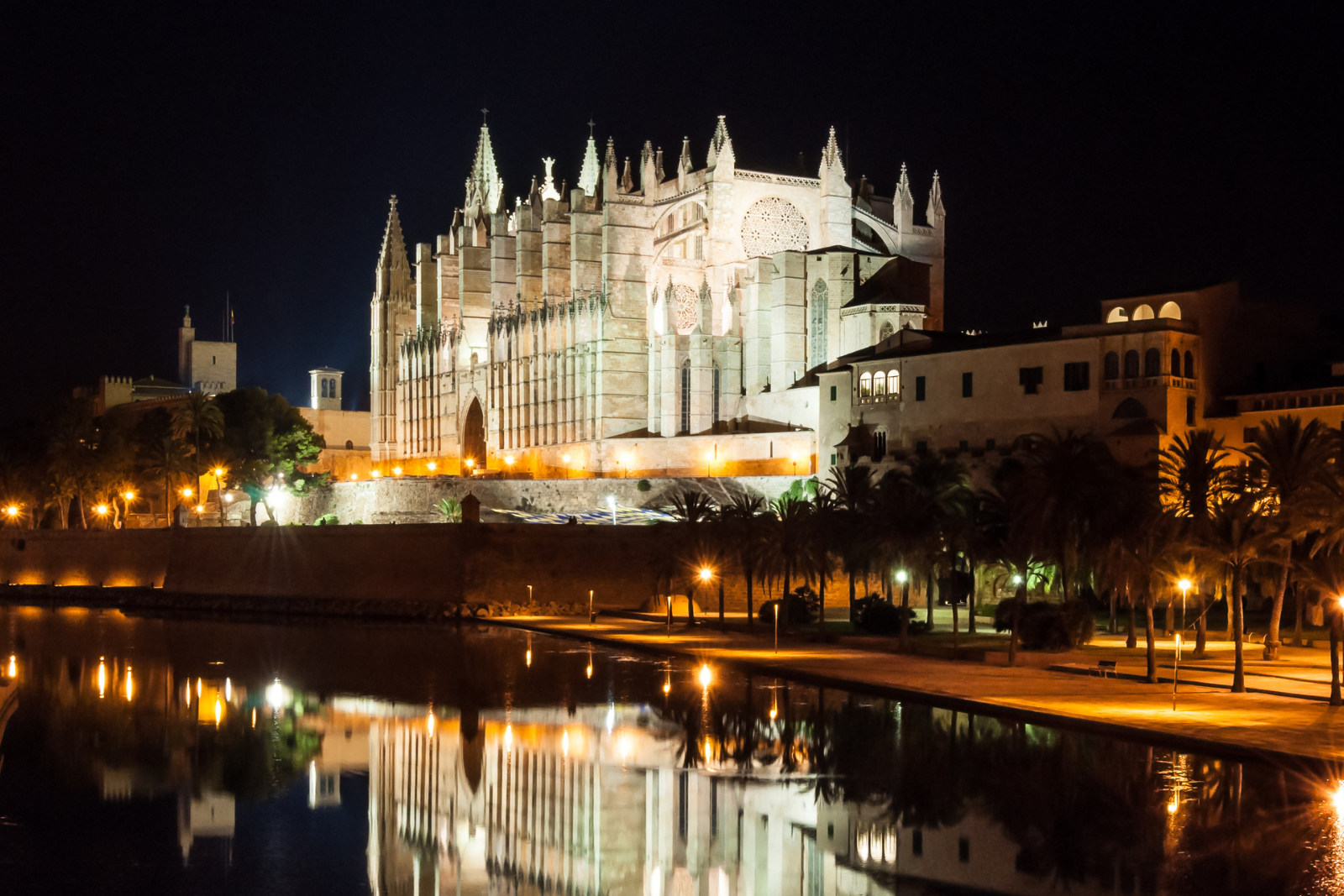
Palma’s historic centre is one of the largest intact medieval quarters in the Mediterranean: Roman foundations, Arab walls, Gothic churches and eighteenth-century merchant houses inside the same few hundred metres. It is protected, and the protection is real. Facades, rooflines and listed interior elements cannot simply be removed, and nothing gets built above the historic roofline.
That is a constraint if you want to build. It is the whole point if you want to own. The supply of houses inside those streets is fixed, and it has been fixed for centuries.
Buying in Palma
A city address behaves differently from a coastal one. It is lettable in shoulder season, it is walkable without a car, and its value is tied to a functioning economy rather than to a season. It also comes with a paper trail — protection categories, licences, community statutes — that needs reading before you sign, not after.
Every home we take on is measured, filmed and checked before anyone is asked to travel. If you want to see what is currently available in Palma and what the numbers actually look like, the homes are all on one page.