My Account
🇬🇧EN
🇪🇺EUR
Book a call
Search Global Homebase

Category: Mallorca

Editorial destination hub focused on modern property ownership, lifestyle real estate, investment opportunities, operational simplicity, and long-term living in Mallorca. This category structures all Mallorca-related Homebase articles, insights, owner stories, and market perspectives within one scalable destination framework.

  • Sant Elm — Mallorca’s Wild Western Edge

    Sant Elm — Mallorca’s Wild Western Edge


    Drive to the very end of Mallorca’s southwest coast and you arrive at Sant Elm — a small, unhurried village named after the patron saint of sailors, with the Serra de Tramuntana rising at its back and the dragon-shaped island of Sa Dragonera lying just offshore. It is about as far as the island goes, and it feels it: the road runs out, the crowds thin, and the sea takes over.

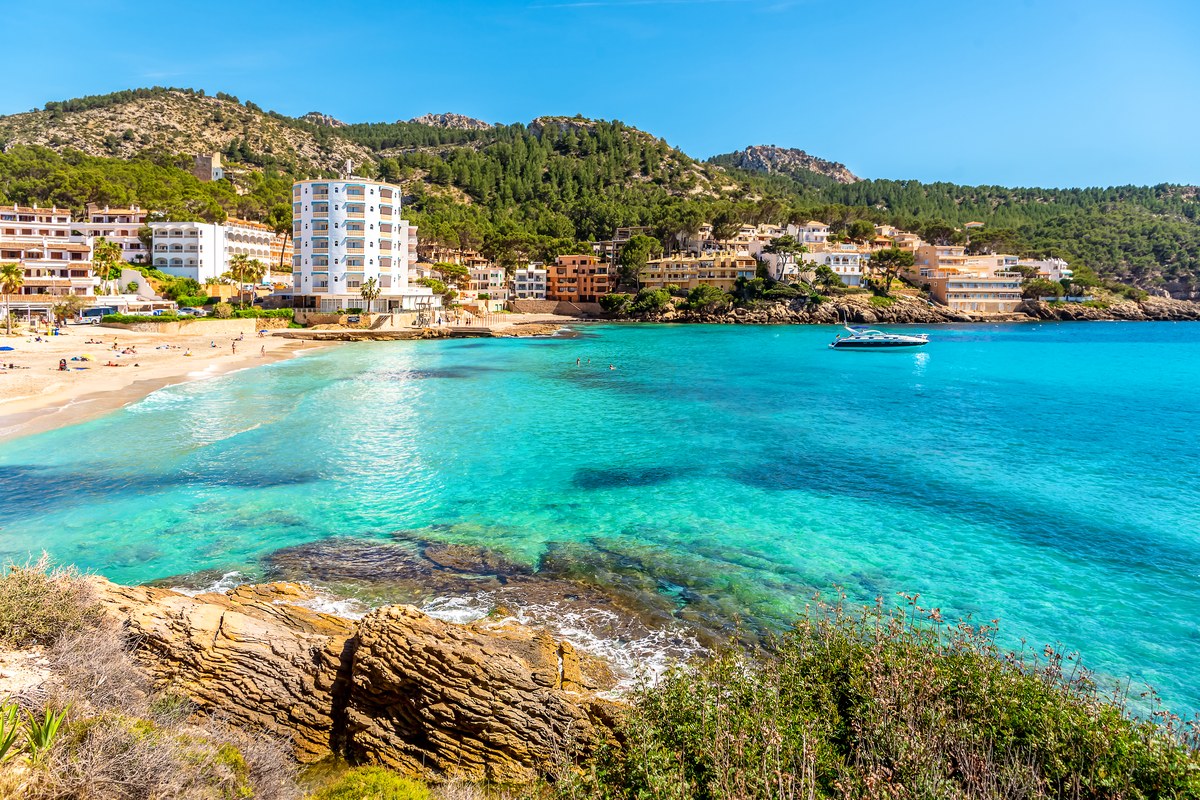
    Sant Elm has stayed close to its roots. Once a fishing village, it never became a resort — just a couple of small sandy beaches, a scatter of good fish restaurants looking out to Sa Dragonera, and turquoise coves like Cala en Basset within walking distance. In summer, boats leave the little jetty for the short crossing to the island; the rest of the year it is simply one of the quietest, most beautiful corners of Mallorca.

    Sa Dragonera — the island that was saved

    The uninhabited island offshore is more than scenery. In 1977, environmentalists occupied Sa Dragonera to stop a planned tourist development — and they won. The island became a nature reserve instead, a turning point for conservation across Mallorca, and has been a protected park ever since. Today it shelters hundreds of plant species and rare seabirds, including Balearic shearwaters and Eleonora’s falcons, its cliffs and lighthouses left to the wind and the water. A short boat trip from Sant Elm puts you on its trails for the day.

    La Trapa and the old monks’ path

    Above the village lie the ruins of La Trapa, a monastery built in 1810 by Trappist monks who had fled the French Revolution. To live self-sufficiently on this remote coast, they raised a chapel and a mill and carved dry-stone terraces into the hillside; the community faded in the 19th century, and in 1980 a Balearic conservation group took the land on and began to restore it. The famous walk up from Sant Elm — a round trip of around three hours through coastal maquis and pine, part of the island-long GR-221 route — is rewarded at the Mirador de la Trapa with what many consider the single finest view of Sa Dragonera anywhere in Mallorca.

    The quiet side of the southwest

    Just inland sits S’Arracó, a village of traditional stone houses and a few grand modernist homes built with money sent back by emigrants who once left for France. There is a small Saturday market, a slower rhythm, and the sense — rare on this coast — of a place still living at its own pace. Sant Elm is where Mallorca keeps its wildness.

    Living here, shared

    All of this is a short drive from Casa Sunshine, the contemporary sea-view villa above Port d’Andratx — a landmark home, move-in-ready and licensed to rent. The marina, the coves and the trailheads of the far west are all within easy reach; the view, once you are up here, is yours to keep.
    Explore Casa Sunshine →

  • Evenings in Port d’Andratx — Dinner on the Water

    Evenings in Port d’Andratx — Dinner on the Water


    Port d’Andratx is beautiful by day. But it is in the evening — when the light turns gold over the bay and the marina begins to glitter — that the harbour becomes something else entirely. This is when the town is at its best, and when you understand why so many people never really leave.

    Because the bay faces west, the day ends with the sun sinking straight into the sea. The fishing boats come in, the yachts light up one by one, and the whole waterfront takes on a slow, golden glow. It is the kind of sunset you plan an evening around — and half the town does exactly that.

    Dinner on the water

    The heart of it is Avenida Mateo Bosch, the seafront boulevard on the southern side of the harbour, lined with restaurants and cafés whose terraces open straight onto the marina. Landmarks like Cappuccino draw a steady, stylish crowd; smaller kitchens tucked into the back streets serve some of the best seafood on this coast, much of it landed that same day at the fish house on the front. Between the tables, boho-chic boutiques and galleries stay open late into the warm evenings.

    The most glamorous harbour after dark

    Few places in Mallorca feel as alive at night as Port d’Andratx in high season. The marina — one of the most exclusive in Mallorca — fills with owners and crew; the promenade hums; and the mix of superyachts and working fishing boats gives the whole scene an easy, unforced glamour. It is sophisticated without being stiff: a place to dress up a little, walk the front, and let the evening run long.

    A harbour with two lives

    There is another Port d’Andratx worth knowing. In winter, when many restaurants close between November and March, the crowds thin and the port quietly returns to its origins as a small fishing village — arguably its most honest self, and beautiful in a different, gentler way. To live here is to have both: the summer buzz and the winter calm, in one of the loveliest bays in the Mediterranean.

    Living here, shared

    Casa Sunshine sits in the hills directly above all of this — the sun crossing its terraces through the day and setting in the sea each evening, with the harbour and its restaurants just minutes below. A contemporary sea-view villa, move-in-ready and licensed to rent.
    Explore Casa Sunshine →

  • Port d’Andratx — Mallorca’s Most Beautiful Harbour

    Port d’Andratx — Mallorca’s Most Beautiful Harbour


    Many people call Port d’Andratx the prettiest harbour in Mallorca — some would say in the whole Mediterranean. It sits in a deep, fjord-like bay folded into the hills at the island’s southwest tip, where the Serra de Tramuntana meets the sea. Round the last bend of the coast road and the whole thing opens at once: white hulls on still water, pine-green slopes, and the light that has drawn people here for generations.

    For most of its life it was simply a fishing port. Boats have sheltered in this bay since at least the late 1700s, and the stone docks were laid in the 19th century. Then, in the 1960s, the wider world found it — the calm water, the amphitheatre of hills, the sunsets — and the quiet village began its transformation into a meeting place for the international jet set. Villas climbed the surrounding hills; the marina filled with yachts. Yet it never quite let go of its roots. Fishing nets still dry on the pier, and in the evening you can still buy the day’s catch straight from the boats at La Llotja, the old fish house on the front.

    Watchtowers and the working sea

    The harbour has two sides, and two lives. On the north shore, the Club de Vela marina — open since the late 1960s, with hundreds of berths — is the glamorous social heart of the port. On the south, the fishing fleet still works out of the older town. Above it all stand the stone watchtowers, Sant Carles on La Mola and Sant Francesc, raised centuries ago against the North African pirates who once raided this coast. The little church of Nostra Senyora del Carmen anchors the village, and every 16 July the fishing community carries its patron saint, the Virgen del Carmen, out onto the water.

    The promenade, and the light

    Life gathers along Avenida Mateo Bosch, the waterfront boulevard of cafés and restaurants where a coffee at a marina-side terrace is a Port d’Andratx institution. The back streets hold a boho-chic mix of boutiques, galleries and small food shops. There is no wide beach here — the swimming is off rocks and coves — but the nearest sand is minutes away at Sant Elm and Camp de Mar. And because the bay faces west, almost every evening ends the same way: the sun dropping into the sea behind a forest of masts.

    Andratx, just inland

    A few kilometres up the valley sits the older town of Andratx — the down-to-earth counterweight to the port’s polish. Its roots reach back to Roman times; the church of Santa María dates from the 13th century, Son Mas castle now serves as the town hall, and the CCA Andratx is one of the most important contemporary art centres in the Balearics. Every Wednesday a market of local produce and crafts fills the streets. Old and new, working and glamorous, side by side — that mix is exactly what makes this stretch of coast so hard to leave.

    Living here, shared

    This is the setting for Casa Sunshine, the contemporary sea-view villa in the hills above Port d’Andratx — a landmark home, move-in-ready and licensed to rent, with 300° of sea and mountain from the door. The harbour is minutes below; the sunsets are free.
    Explore Casa Sunshine →

  • A Grove That’s Already Growing

    A Grove That’s Already Growing

    We hold the right to buy Casa Son Cabaspre, and we’re now assembling the group of up to eight owners who will share it. A lot of people quietly carry the same dream: their own olive grove, lemons and oranges by the door, a place private enough to disappear into. Here, that dream isn’t a someday-maybe project waiting for you — it’s part of what we deliver. The house is already move-in-ready; what we’re adding are the three things that turn a beautiful finca into the home you picture: a real country kitchen, a shaded pergola terrace, and a grove planted and growing before you arrive.

    A grove, planted as part of the project

    The eight thousand square metres are mature, not raw — old olive trees, citrus, agave and poplars already frame the house. The project builds on that: fifty thousand euros set aside to plant a proper olive grove and an orchard of lemon and orange, established now so they are rooted and giving by the time you take your first summer here. You don’t arrive to bare earth and a to-do list — you arrive to trees already in the ground, and decades of giving ahead: your own oil in time, fruit on the table, and lemons and oranges off your own trees for the evening’s cocktails. There’s water to grow it with, too: the property draws its own supply from a mountain spring on the land — feeding the pool, the showers and the planting — so the grove and gardens are never dependent on the mains. And there’s still room to make it yours: a few more olives, a corner of herbs, whatever you want to add over the years.

    A kitchen and a long table under the pergola

    The two other additions are built around that grove. Inside, a proper country kitchen — the heart of the house, for cooking what you carry up from the Saturday market and pick from your own trees. Outside, between the house and the pool, a shaded pergola terrace with a long table and a built-in barbecue: the place for the slow lunch, the late dinner, the evening that runs on. And the view from that table is the whole point — you look straight out over your grove as it climbs into the protected mountains behind. The kitchen, the pergola and the grove aren’t extras; they’re delivered as part of the project, so the home is ready the day you walk in.

    Private enough to disappear

    This is land you can lose yourself in. Screened by its own olives and poplars and backing straight onto protected mountain, the garden is completely unoverlooked — no neighbour’s window, no passing road, just the trees, the ridge and the quiet. There is room for the things you never quite have space for: a yoga deck under the trees for the cool of the morning, a shaded reading corner, a long table for a slow lunch. A whole finca’s worth of privacy, the kind that is almost impossible to find — and, shared by up to eight, within reach.

    Five minutes to the town, all year

    And you are never far from life. Five minutes down the hill is Esporles — a real working Mallorcan town where a mountain stream runs under tall plane trees and locals fill the café terraces all year round. Walk or drive down for an early coffee, good family restaurants, the Saturday market, and that particular smell of a mountain village in the morning. It is the rhythm of belonging somewhere, not visiting it — the grove at home, the town just below, the same faces season after season.

    Live in it, let it, share it

    This is where move-in-ready changes the picture. The grove, the new kitchen and the pergola are delivered as part of the project, so you simply arrive to a home that is ready. When you are away, the house can be let, so it works while you are not there. Mallorca Homebase handles the management and the care; you arrive and pick the lemons.
    Explore Casa Son Cabaspre →

  • A Tramuntana Retreat, Owned Together

    A Tramuntana Retreat, Owned Together


    We’ve secured the right to buy Casa Son Cabaspre, and we’re now assembling the group of up to eight owners who will share it. This is the place we’re inviting them into — a restored finca where the garden runs straight into the protected Serra de Tramuntana above Esporles. Not a home to visit. A home to own a piece of.

    Protected land, right behind the house

    The Serra de Tramuntana is a UNESCO World Heritage landscape — terraced hillsides, dry-stone walls and pine and holm-oak forest, legally protected from development. From the garden you look onto wooded slopes and a bare limestone ridge that changes colour through the day. What you see is what stays: no new neighbours on the hill, no resort creeping up the valley. For the up-to-eight owners, that permanence is part of what you buy — a view that can’t be sold off or built over.

    Walk straight from the garden

    You don’t drive to the trailhead here; you start from the gate. Old farm paths climb from the edge of the property into the hills and link into the wider Tramuntana network of walking and cycling routes. Mornings are for the cooler high ground and long views back over the valley; afternoons for the shade of the garden and the pool. Valldemossa, Banyalbufar and the west-coast cliffs are a short drive for when you want the sea — but most days the best of it is simply out the back door.

    Its own water and sun

    The house looks after itself in the ways that matter most up here. Casa Son Cabaspre draws its own water from a mountain spring on the land, and solar panels on the roof carry most of its energy — so for much of the year it runs largely off-grid. When the sun isn’t enough, an oil-fired system backs it up for hot water and winter heating. It means the quiet comes with independence: a Tramuntana home that isn’t tied to the mains for its water or, for the most part, its power.

    A place to slow down

    This is a house that asks you to stop. The quiet morning by the pool before the heat. The afternoon shade under the old olives. And when the season turns, the evenings indoors by the fire while the mountain goes dark outside the window. It’s the kind of calm you settle into over years, not the kind you check into for a weekend — and because it’s shared, it stays cared for and lived-in between your visits, not shuttered and empty.

    Anselm Van den Auwelant and Torben Aagaard at Casa Son Cabaspre
    Anselm Van den Auwelant, the developer who restored Casa Son Cabaspre (left), with Torben Aagaard of Mallorca Homebase — at the house, agreeing the way forward.

    Owned together, handled for you

    Buying a whole Tramuntana finca like this alone is a big step — and a year-round responsibility most people don’t want. Co-ownership changes that. As one of up to eight owners you take your weeks through the year, let the weeks you don’t use, and share the cost and the upkeep. Mallorca Homebase handles the purchase structure, the management and the care; you simply arrive. The mountain, the garden and the quiet are yours — for a fraction of owning all of it alone.
    Explore Casa Son Cabaspre →

  • Esporles — Your Market Town, Five Minutes Away

    Esporles — Your Market Town, Five Minutes Away


    Five minutes down the hill from Casa Son Cabaspre is Esporles — and it’s the kind of town people mean when they talk about the real Mallorca. We hold the right to buy the finca above it and are now assembling the group of up to eight owners who will share it. This is the town that comes with it: not a resort, but a working Mallorcan village, lived-in and busy all year round.

    Your Saturday market, five minutes from the door

    On Saturday mornings the town fills for its weekly market, and for an owner here that becomes a habit, not an outing. Stalls of Mallorcan almonds, olive oil, dried apricots and tomatoes, local honey, cheeses and just-baked bread — the best of the island’s produce, set out by the people who grow and make it, a short drive from your own kitchen. You shop for the weekend the way locals do: fresh, close to home, and straight from the source.

    A town that lives all year

    The heart of Esporles is its long main street, where a mountain stream runs under tall plane trees and good cafés, bakeries and family restaurants keep the square alive long after the market packs up. Because the town shops, eats and gathers locally through every season, a home here is never shuttered into a dead resort in winter — it sits in a place that is genuinely alive in February as much as in August. For owners who come and go through the year, that matters: there’s always a real town to come home to.

    Mountains, water and La Granja

    Esporles is Tramuntana through and through. Walking and cycling routes climb straight from the village into the protected mountains, and the historic estate of La Granja — a centuries-old Mallorcan country house with gardens, water and living craft traditions — sits just outside town. Valldemossa, Banyalbufar and the west coast are a short drive away, with Palma and the airport close enough for an easy day. It’s a lot of Mallorca to have on your doorstep — and, shared by up to eight, a lot more within reach than buying the whole thing alone.

    Living here, shared

    This is the setting for Casa Son Cabaspre — the restored five-bedroom finca in the hills above Esporles, with pool, gardens and mountain views. The market, the town and the mountains on your doorstep, every week of the year. The quiet is free.
    Explore Casa Son Cabaspre →

  • Peguera and Cala Fornells — The Coast Just West of Santa Ponsa

    Peguera and Cala Fornells — The Coast Just West of Santa Ponsa

    Drive a few minutes west from Santa Ponsa and the coast softens into a string of pine-fringed coves and easy-going resorts. This is the quieter, greener edge of Calvià — and one of the prettiest stretches of Mallorca’s southwest.

    Cala Fornells

    Cala Fornells is the jewel: a small, sheltered cove of terracotta villas stacked above the water, pines leaning over the rocks, and turquoise water you’ll want to swim in straight away. It grew up gently in the mid-20th century as a low-rise, almost Italianate cluster of houses and small hotels, and it has kept that discreet, slightly exclusive feel — people sunbathe on the stone terraces as much as on the small beach. The long-running La Gran Tortuga, open since 1974, still serves Mediterranean food above the bay. It’s the kind of corner second-home owners tend to keep to themselves.

    Peguera

    Next door, Peguera (Paguera) is the all-rounder. Three sandy beaches — Palmira, Tora and Romana — are linked by a pedestrian promenade lined with shops, cafés and restaurants. It was, in fact, the first resort in Mallorca to import sand and build itself a beach. Long popular with German families — locals half-jokingly call it “little Germany” — it’s relaxed, well-kept and busy in the best sense, with a season that runs late: every October it hosts the Challenge Peguera triathlon.

    And keep going

    The southwest keeps giving. Camp de Mar is arguably the prettiest little resort in Mallorca, with a restaurant on its own islet reached by a wooden footbridge and the Golf de Andratx beside it. Sant Elm sits at the very tip, looking across to Sa Dragonera. Coastal walks like Cap d’Andritxol open up long views over the whole coast. And Palma is still only about half an hour back the other way.

    One home, the whole coast

    All of it sits within easy reach of El Mirador, the renovated villa in Santa Ponsa — with the southwest coast as your backyard: the busy beaches when you want them, the quiet coves when you don’t.

    Explore El Mirador →

  • Port Adriano — The Southwest of Mallorca by Sea

    Port Adriano — The Southwest of Mallorca by Sea

    Santa Ponsa sits on one of Mallorca’s great sailing bays — sheltered water, steady summer breezes, and two very different marinas within a few minutes of each other. To understand this coast, you have to see it from the water.

    Two marinas, two moods

    The Club Nàutic Santa Ponsa is the local heart of it. Built in 1975 in Sa Caleta — the same cove where Jaume I came ashore in 1229 — it moors several hundred boats and runs the easy, year-round sailing life that gives the town its rhythm.

    A short drive west, below the cliffs of El Toro, is something else entirely. Port Adriano opened in 2012 after a roughly €90-million rebuild led by the marina group Ocibar, with its commercial quarter designed by Philippe Starck. Starck described a port as a village where the piers are the streets — and it shows: low wooden buildings, sculptural mooring bollards and lamps, and berths built for yachts up to around 80 metres, making it one of the few marinas in Mallorca that can take the largest boats afloat.

    More than a marina

    Around the water, Port Adriano has filled with restaurants, bars and design boutiques — somewhere between a harbour and an open-air lifestyle quarter, busy through the season with concerts and regattas like the Multihull Cup. You don’t need a yacht to enjoy it: lunch on the quay, a sunset drink, the slow parade of boats coming and going. And some of the island’s best golf is about five minutes away.

    Out on the water

    From either marina, the southwest opens up. Sailing routes run to the Illes Malgrats off Santa Ponsa, west to the pine-fringed coves of Cala Fornells and Camp de Mar, and on to Sa Dragonera — the uninhabited island and protected nature park at Mallorca’s southwest tip. It is some of the most rewarding day-sailing in the Mediterranean, and it begins at the end of the street.

    A base on this coast, shared

    El Mirador, the renovated villa in Santa Ponsa, sits minutes from both marinas, with the whole of this coast on your doorstep. Keep a boat, charter for the day, or just watch the bay from the terrace.

    Explore El Mirador →

  • Santa Ponsa — Where Mallorca’s Story Began

    Santa Ponsa — Where Mallorca’s Story Began

    Most people meet Santa Ponsa as a wide Blue Flag beach and a promenade of cafés. Fewer realise they are standing on the spot where modern Mallorca began.

    In September 1229, King James I of Aragon — Jaume I, the Conqueror — came ashore here with a fleet of more than 150 ships to take the island from its Moorish rulers. The cove where he landed, Sa Caleta, is now the Santa Ponsa marina. On the rise above it stands the Creu del Desembarc, the Cross of the Landing: a stone monument raised in 1929 for the 700th anniversary, carved with reliefs of the conquest, and rebuilt in 1996 after a lightning strike. Every September the town restages the moment with the Festes del Rei en Jaume — a mock battle between Moors and Christians fought out on the sand.

    The beach and the town

    Today Santa Ponsa wears its history lightly. The main beach is a wide arc of soft golden sand, more than 500 metres long, backed by pines and flying a Blue Flag for water quality. A promenade of restaurants and cafés runs behind it, and smaller, quieter coves — Caló d’en Pallisser, Cala Falcó with its well-known beach bar — sit within walking distance. Unlike some of its neighbours, Santa Ponsa has kept its scale: low villas and apartments folded into the hillside rather than high-rises along the shore. A steady international community means it stays open and alive year-round, not only in August.

    Golf, sea and mountains

    Santa Ponsa is also one of the island’s golf capitals — two 18-hole courses and a 9-hole, including the famous 18th green shaped like Mallorca itself, set in a pond and reached by a bridge. The Club Nàutic Santa Ponsa, built in 1975 in the old landing cove, moors hundreds of boats. Behind the town, the Puig de Sa Morisca archaeological park climbs past Talayotic and Moorish remains to long views over the bay; offshore, the Illes Malgrats sit in protected water. Palma and the airport are roughly 20 to 30 minutes away — close enough for a spontaneous dinner in the old town, far enough to feel like your own stretch of coast.

    Living here, shared

    This is the setting for El Mirador, the fully renovated villa in Santa Ponsa, with the beach, the marina and the golf all minutes from the door. The history is free.

    Explore El Mirador →

  • Santanyí Market — The Mornings the Whole Island Drives South For

    Santanyí Market — The Mornings the Whole Island Drives South For

    Twice a week, the quiet stone town ten minutes from Los Hibiscus stops being quiet. On Wednesday and Saturday mornings, from nine until two, more than 150 stalls fill the Plaça Major and the narrow streets around the 18th-century church of Sant Andreu — and people drive in from every corner of Mallorca to walk them.

    Not a souvenir market

    This is where the southeast actually shops. Tables of heirloom tomatoes and just-picked vegetables, Mallorcan sheep’s cheeses and cured sobrassada, olives and capers from the salt flats down the road, local wine, almonds, honey and flowers. Between the food stalls: handmade leather, ceramics, linen, and the slow craft work the island still does well.

    Wednesday or Saturday

    Timing is everything. Saturday is the big one — louder, fuller, the whole region out for a long lunch afterwards. Wednesday is calmer, and the better morning if you actually want to talk to the people behind the tables. Either day, go early; by midday in summer the streets move at the pace of the crowd, and by half past one the vendors start packing down for the siesta.

    Come for the produce, stay for the town

    Santanyí’s centre is largely pedestrian, built from the warm golden marès sandstone that gave Palma’s cathedral its face. Between stalls there are cafés for a coffee and an ensaïmada, boutiques in old shopfronts, and a bench in the shade to watch a morning that has happened here, more or less unchanged, for generations.

    The weekly rhythm of Los Hibiscus

    For an owner here, this is simply the week — a ten-minute drive, a basket to fill, and the kind of ordinary island morning that turns a holiday home into a place you belong.

    Explore Los Hibiscus, or see the location in full.